June 16, 2026
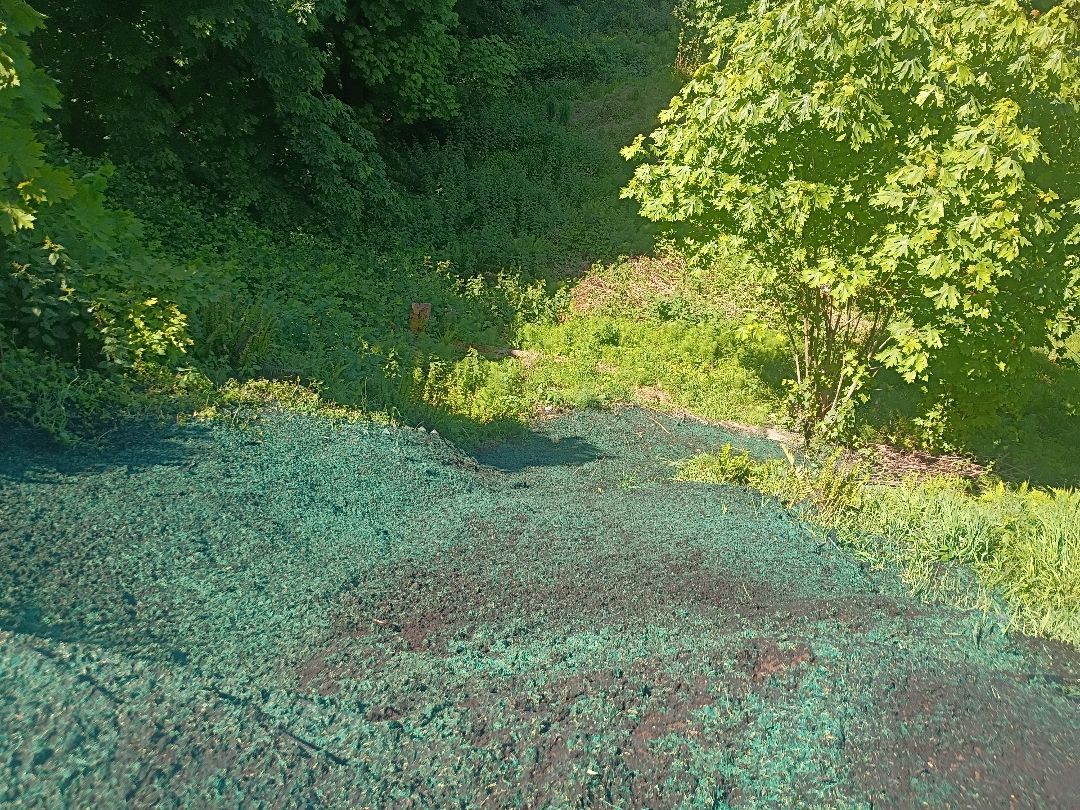
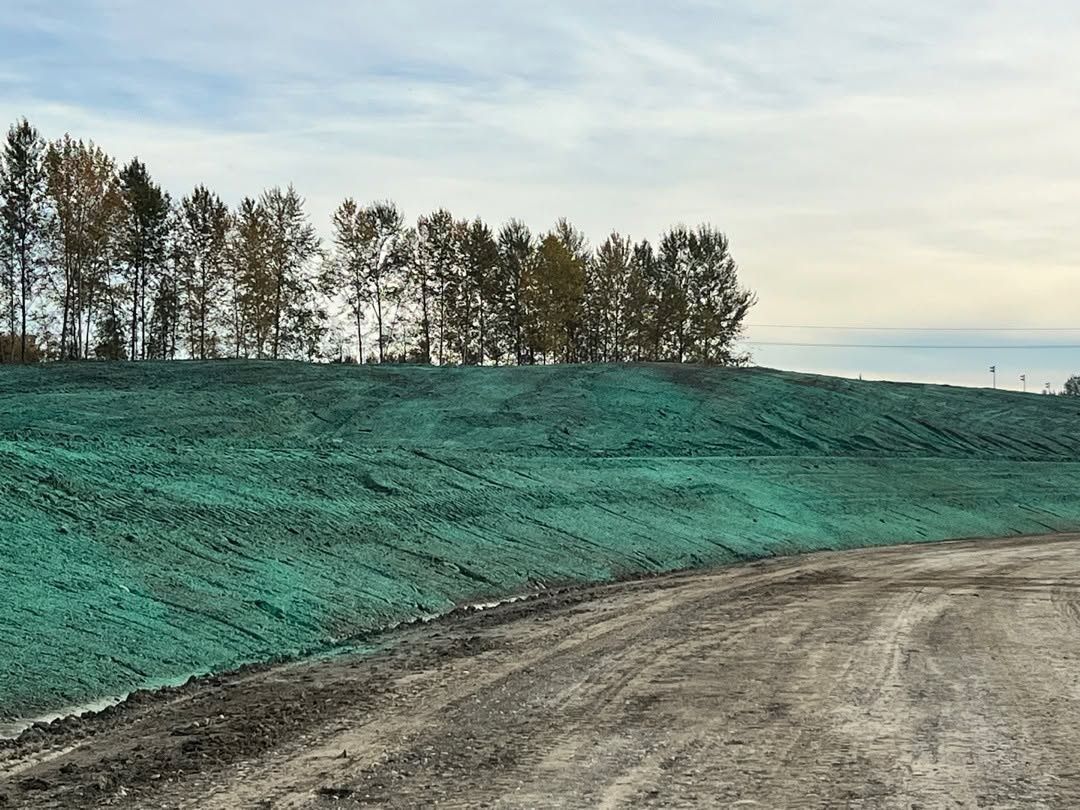
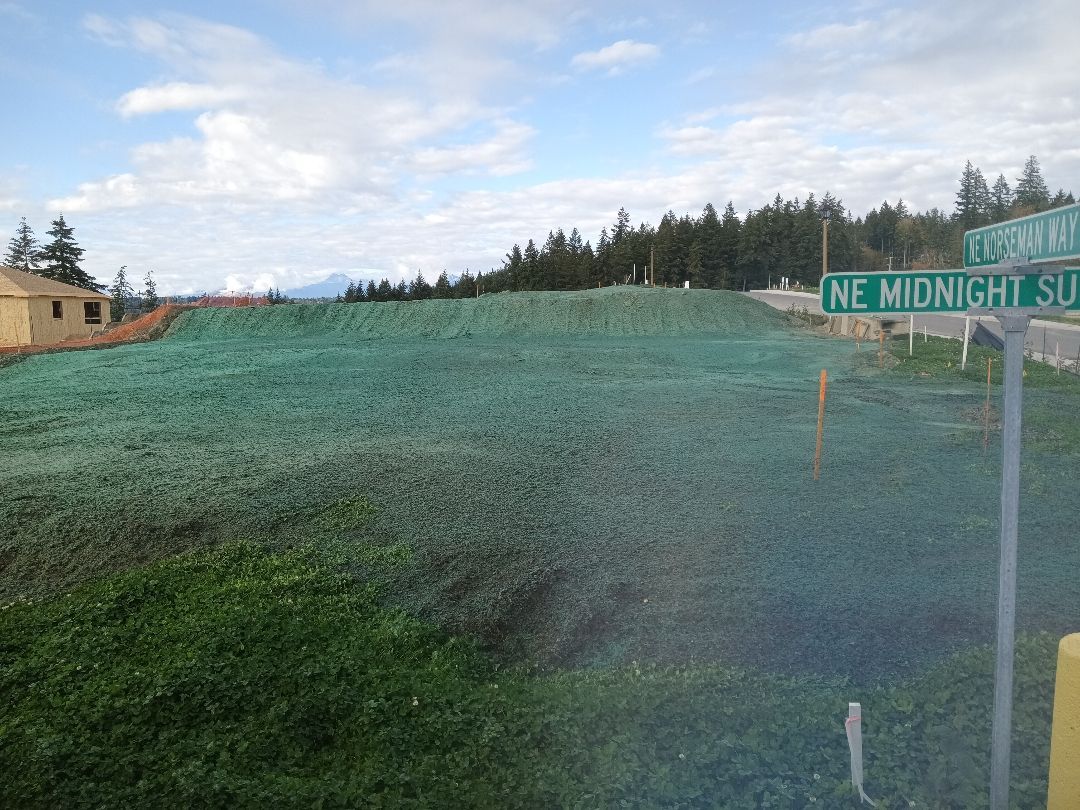
Hydroseeding, mulch placement, and rock slinging each play a defined role in erosion control across residential, commercial, and construction sites. Hydroseeding is commonly used where fast, uniform vegetation is needed to stabilize soil. The slurry mixture bonds to the surface, helping reduce runoff while encouraging quick grass establishment. As growth develops, root systems strengthen the soil and provide longer-term protection. According to Reed Intelligence, erosion control accounts for roughly 39% of hydroseeding applications, reflecting its widespread use in slope stabilization, roadway projects, and land restoration.
Mulch placement is often used as a short-term solution on newly disturbed soil in residential yards and light commercial properties. It helps shield the ground from rainfall, retain moisture, and reduce surface movement. When used alongside seeding, mulch improves germination conditions and limits washout. This makes it effective for moderate slopes, landscaped areas, and transition zones where vegetation is still establishing.
Rock slinging, using gravel or larger aggregate, is best suited for high-flow or high-impact areas such as drainage paths, steep slopes, and commercial sites with concentrated runoff. It provides immediate surface protection without requiring growth time and performs well in areas where water volume or speed exceeds what vegetation alone can manage.
Stabilizing and Reinforcing Slopes for Long-term Support
Slope stabilization plays a major role in preventing soil movement in high-risk areas. When land is left unprotected on an incline, gravity and rainfall can quickly cause displacement. Structural reinforcement helps reduce these risks and supports more predictable land behavior over time. In many cases, erosion management strategies begin with stabilizing the most vulnerable slopes first.
Retaining structures are commonly used to hold soil in place and reduce downward pressure. These barriers interrupt natural slope movement and redirect water flow in safer directions. Materials such as stone, timber, and engineered blocks are often selected based on site conditions. Proper installation ensures that long-term stability is achieved without disrupting surrounding landscapes.
Terracing is another effective method used to break up steep grades into manageable steps. This reduces runoff velocity and allows water to absorb into the soil more gradually. Each level acts as a buffer zone that limits erosion potential during heavy rainfall. When combined with vegetation, terracing significantly improves erosion control outcomes on sloped properties.
Channeling and Redirecting Water Flow Efficiently
Managing water movement is essential for reducing soil loss and surface degradation. Without proper control, runoff can carve channels into exposed land and transport large amounts of sediment. Redirecting water flow helps distribute moisture more evenly and prevents concentrated damage. Effective erosion control often depends on how well water is guided across a site.
Drainage channels are designed to move excess water away from sensitive areas. These systems reduce pooling and minimize the force of flowing water during storms. When properly maintained, they help protect both soil structure and surrounding infrastructure. Integrating drainage planning early in development significantly improves long-term land performance.
Permeable surfaces also support better water absorption by allowing rainfall to pass through instead of running off. Driveways, walkways, and parking areas benefit from materials that reduce surface sealing. This approach supports groundwater recharge while lowering erosion risk. Combined with grading and vegetation, it creates a balanced water management system that strengthens erosion management outcomes.
Grading and Reshaping Land for Balanced Flow
Land grading focuses on reshaping terrain to improve stability and manage water movement more effectively. By adjusting slopes and contour levels, property owners can reduce the speed and force of runoff. This helps prevent soil displacement while improving overall site usability. Proper grading is often a foundational step in long-term land improvement planning.
Contour-based adjustments guide water along natural land shapes rather than forcing unnatural flow patterns. This method reduces erosion by distributing water more evenly across the surface. It also supports healthier vegetation growth by improving moisture absorption. Over time, this contributes to more consistent and reliable erosion control performance.
In some cases, even small adjustments to slope angles can make a significant difference. Reducing steep gradients lowers the energy of moving water and limits soil disruption. These modifications require careful planning to balance function and accessibility. When executed correctly, grading creates a more stable and predictable landscape.
Engineering and Strengthening Soil Systems with Modern Methods
Modern engineering solutions have expanded the range of tools available for land protection. Geotextiles reinforce soil layers while still allowing water to pass through. These materials add structural integrity without fully restricting natural drainage. As a result, they are widely used in both construction and environmental restoration projects.
Temporary stabilization mats are also used to protect bare soil during early vegetation growth. These coverings reduce surface impact while plants develop root systems. Over time, they naturally break down, leaving behind a more stable ground layer. This approach supports erosion management while minimizing long-term environmental disruption.
Biotechnical shoreline systems combine natural elements with engineered structures for improved durability. These systems absorb wave energy while supporting aquatic ecosystems. They are especially useful in areas exposed to water movement and fluctuating environmental conditions. Their hybrid design reflects a more adaptive approach to erosion control in sensitive regions.
Maintaining and Repairing Protective Systems Consistently
Ongoing maintenance is essential for keeping erosion prevention systems effective over time. Without regular inspection, small issues can develop into larger structural or environmental problems. Consistent monitoring ensures that vegetation, drainage, and structural components continue functioning as intended. In most environments, erosion prevention requires continuous attention rather than one-time installation.
Seasonal changes can significantly impact how land systems perform. Heavy rain periods may overload drainage structures, while dry conditions can weaken vegetation cover. Adjusting maintenance routines based on seasonal patterns helps maintain balance throughout the year. This adaptive approach reduces long-term repair costs and improves system reliability.
Plant health also plays a major role in maintaining soil protection. Weak or damaged vegetation exposes soil to increased runoff and wind exposure. Regular replanting and care help sustain consistent ground coverage. Healthy plant systems remain one of the most effective components of erosion control across diverse environments.
Monitoring and Adapting for Long-term Land Protection
Continuous monitoring allows property owners to identify erosion risks before they escalate. Regular site inspections help detect early signs of soil movement or water damage. Addressing these issues promptly prevents more costly repairs in the future. This proactive mindset is essential for maintaining effective erosion control over time.
Tracking environmental changes helps improve decision-making for land management. Weather patterns, water flow shifts, and vegetation changes all influence site stability. By observing these factors, adjustments can be made to improve performance. This ongoing evaluation ensures that protection strategies remain aligned with real-world conditions.
Documentation and review also support long-term planning and system improvements. Records of past issues and solutions provide valuable insight for future maintenance. This helps refine strategies and improve overall efficiency. With consistent oversight, landowners can maintain safer and more resilient properties.
Implementing a combination of vegetation, structural reinforcement, water management, grading, and engineering techniques creates a comprehensive approach to land protection. Each method contributes differently, but together they form a more complete system that adapts to changing environmental conditions. Regular maintenance and monitoring ensure these systems continue performing effectively over time. When applied consistently, these strategies help protect property value, reduce environmental impact, and improve long-term land stability. Contact Hydroseeding & Bark Blowers!